Part I — The Hesitation Pitch
“The hesitation pitch was so good it was banned by the American League. Will Harridge, president of the league, said I was tricking the batters and umpires. He said I had the batters swinging at the ball when I still had it in my hand — and the umpires were calling strikes when the catcher thumped his empty glove.”
— Satchel Paige, as quoted in The New Baseball Bible
Satchel loved telling that story. It was part showmanship, part truth — and like most of his tales, it grew taller with time. The heart of it was real: in 1948, his famous “hesitation pitch” had stirred enough confusion and controversy that the American League actually stepped in to rein him back.
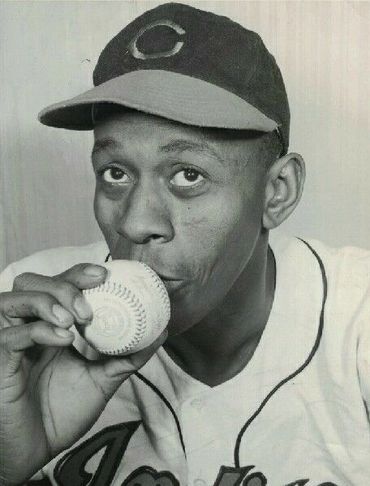
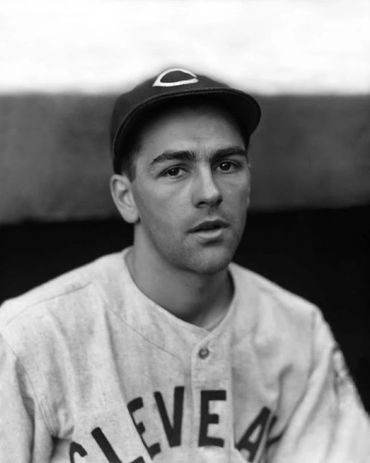
When Paige joined the Cleveland Indians that summer, it was one of the boldest signings in baseball history. Somewhere between 39 and 50 years old — depending on which document or relative you asked — he arrived to help Bill Veeck’s club chase a pennant. Even his age was a kind of performance. One reporter found his mother, who said she was “pretty sure” he was 44, while Paige himself joked, “Other guys claim I’m 60. Oh, well — they still can’t hit me.”
Some saw the signing as genius; others called it a sideshow. The Sporting News sniffed that “to sign a hurler at Paige’s age is to demean the standards of baseball in the big circuits.” But Veeck and manager Lou Boudreau believed he still had magic left in his arm — and that magic lived in his timing.
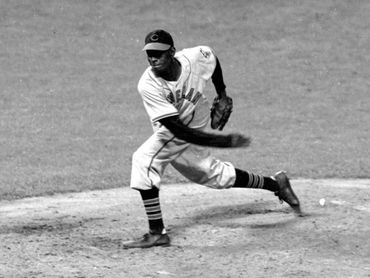
From the moment he first took the mound against the St. Louis Browns, Paige was turning heads. He pitched without winding up, then with one, sometimes stopping just before his arm came forward, freezing batters in confusion. In that debut, he even left one hitter — Whitey Platt — so fooled that he threw his bat all the way down the third-base line. Paige’s hesitation pitch, as Browns manager Zack Taylor grumbled afterward, was “the one where Paige practically completes a follow-through before releasing the ball.”
As his first outings drew crowds and attention, the issue grew. In a mid-summer game in Washington, with the score tied 4–4 in the eighth and runners on first and third, Senators manager Joe Kuhel stormed out of the dugout after one of Paige’s hesitation deliveries to Al Evans. The ump ruled the pitch legal, but Washington protested the game. American League president Will Harridge reviewed the case and ultimately agreed the pitch wasn’t technically illegal — the rule book barred deceptive pauses only when runners were on base.
Part II — The League Draws a Line
What made the decision remarkable was that Harridge himself admitted there was no rule in the book covering Paige’s motion.
At the time, the balk rule banned a pitcher from “starting his motion and failing to deliver,” but it never mentioned brief hesitations within the windup — a gray area Harridge chose to reinterpret. His decision effectively created the modern understanding that any pause or double motion with runners aboard counts as a balk.
Cleveland manager Lou Boudreau immediately took issue with that logic. “There’s nothing in the rules to make it a balk,” he told reporters, arguing that Paige’s delivery was legal under every written definition. He suggested that the league’s action created a “special rule” aimed solely at his pitcher.
That same day, Cleveland Plain Dealer sports editor Gordon Cobbledick published a blistering column that called Harridge’s decision “strictly an anti-Paige ruling.” He wrote: “The decision that Satchel Paige’s hesitation windup constitutes a balk, is strictly an anti-Paige ruling. There is nothing in any one of the twelve sections of the balk rule defining his delivery as illegal. If the authorities intend to call it illegal, they’d better rewrite the rule book. And they’d better try to remember that it wasn’t called a balk when Howard Ehmke employed the same hitch 20 years ago. Nor was it a balk when Earl Whitehill came to a complete stop in his windup while watching a base runner on third. Let’s have no special rules for Satch, gentlemen.”
Cobbledick’s editorial reflected what many in Cleveland believed — that this was less about the letter of the law and more about who was throwing the pitch. A 42-year-old Black pitcher finally getting his chance in the majors had introduced flair into a league that prided itself on conformity. What had been accepted from white pitchers decades earlier was now being judged as “showboating” when Paige did it before sellout crowds.
Still Paige kept baffling hitters with changes of speed and rhythm, just without the exaggerated mid-motion pause when runners were threatening to steal. With the bases empty, versions of the hesitation survived; with men aboard, he toned it down enough to satisfy the umpires. Over the years, the story simplified into the version he liked to tell: the pitch was so good, the league had to ban it.
We fired up the AI Truth-O-Meter to test one of baseball’s most legendary tall tales — was Satchel Paige’s hesitation pitch really so good the league had to outlaw it, or just another piece of Paige-crafted folklore?
On the narrow question — did American League authorities rule that Satchel Paige’s hesitation delivery was illegal with runners on base? — the answer is yes. Harridge instructed umpires to call it a balk in those situations.
On the broader, mythical claim — that the league banned his hesitation pitch altogether because hitters were swinging at a ball he “still had in his hand” and umpires were calling strikes on an empty glove — the truth is more complicated. The core of the story is real, but the edges are embellished in classic Satchel fashion.
Call it: True, with a Paige-sized pause for dramatic effect.
Part III — The AI Reevaluation
We asked AI to apply modern sabermetrics to Satchel Paige’s 1948 season and answer a simple question: How good was he, really?
The answer — even by today’s standards — is very, very good.
For a 42-year-old rookie, Paige’s numbers hold up astonishingly well under modern analytics. His 2.48 ERA in 1948, when translated into today’s context using league averages and park effects, would likely equate to something in the neighborhood of a 145–160 ERA+ — meaning he performed roughly 40–60 percent better than the league average pitcher. That’s elite territory for any reliever, let alone one pitching deep into his forties. Based on how and when Cleveland used him, his leverage profile probably resembled that of a late-inning setup man — the kind of role now reserved for pitchers like Devin Williams or Ryan Pressly, trusted to hold one-run leads against the heart of the order. If we scale his performance to a modern bullpen workload, his value would project in the 3-to-4 WAR range — roughly what you’d expect from an All-Star-caliber reliever. However you run the numbers, the conclusion’s the same: Satchel Paige wasn’t a novelty act or a nostalgia signing. By any modern measure, he was a genuine weapon — the kind of pitcher an analytics department today would build a bullpen around.
— AI Baseball Guy | Human perspective. AI precision. Baseball reimagined.

The AI Truth-O-Meter finds Satchel's story is largely true although a bit exaggerated.