When Two Shortstops Changed Lives
Part I — The Trade That Changed Everything
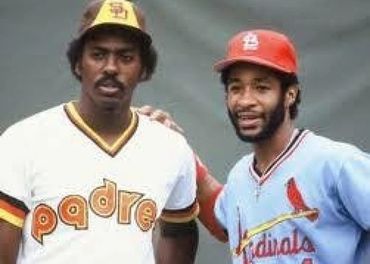
On February 11, 1982, the St. Louis Cardinals and San Diego Padres pulled off one of the most fateful trades in baseball history: Ozzie Smith for Garry Templeton. On paper, it looked like a swap of elite shortstops. In reality, it was two men searching for peace — one trying to escape, the other trying to belong.
Smith, 27, arrived in St. Louis as a defensive wizard still trying to convince people he could hit. “People tend to say that because you don’t have power or you’re not a .300 hitter, you can’t hit,” he told the Post-Dispatch. “But if you check the records, you’ll see I’m one of the ten toughest guys to strike out.” He wasn’t promising fireworks, just competence — and maybe a few stolen bases on that fast AstroTurf. “Everybody on this team can do something with the ball,” he said. “There’s so many things you have to think about.”
Cardinals manager Whitey Herzog, who had orchestrated the deal himself, was already smitten. “We’ve got a hundred percent in Smith,” he told reporters. Ozzie’s wife Denise, a San Diego radio producer, admitted the decision hadn’t come easy. “Ozzie really likes San Diego, but he really wants to play on a winner,” she said. “When he makes up his mind, his mind is made up.”
In a surreal twist, the move even canceled a TV role — a $35,000 guest spot on Fantasy Island. Smith was set to play a shy city clerk whose fantasy was “to be the greatest shortstop in the world.” His agent, Ed Gottlieb, joked that the script might need rewriting now that Ozzie was headed to St. Louis to live that dream for real.
Part II — Templeton’s Turmoil
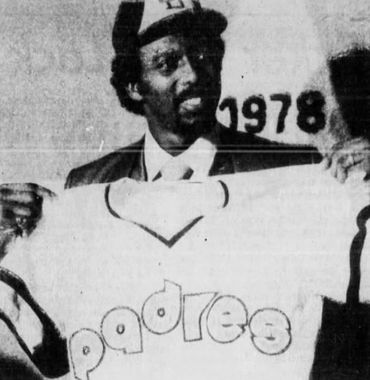
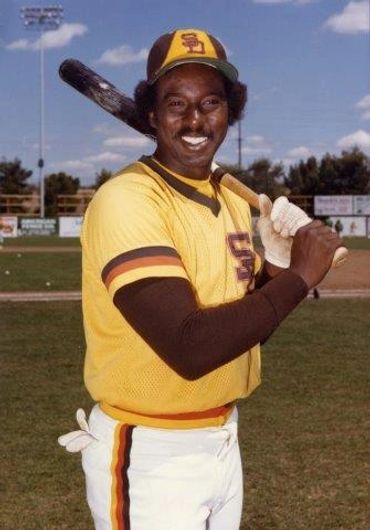
Meanwhile, in San Diego, Garry Templeton held his own press conference and smiled like a man exhaling for the first time in years. “There were too many negative people in St. Louis,” he said. “It’s tough for anybody to play there. I’ve just got to surround myself with positive people.”
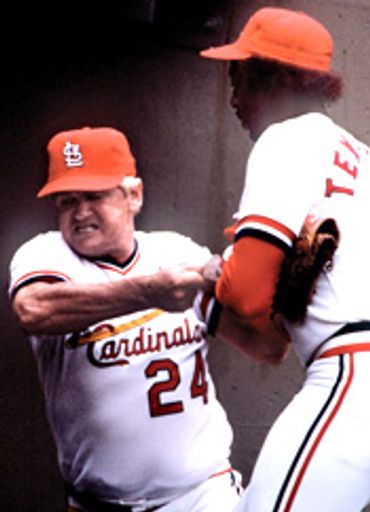
Templeton had become a polarizing figure in St. Louis after a series of emotional flare-ups, the most infamous being a gesture toward fans during a game that August. What few knew was that he had been hospitalized shortly afterward. “The doctors told me it was a chemical imbalance,” he explained. “I was given some medicine to get it back up. I’ve been off the medication for a month and a half now.”
The incident had shaken him deeply. “The people on the visiting teams treated me better than my own teammates,” he said. “If I’d done something wrong, the same stuff would have happened again.” Despite the turmoil, Templeton was eager to start fresh. “I think I’ll fit in,” he told reporters. “I’m on a young ballclub, and when they see me hustling, that’ll give them incentive.”
Behind the scenes, the trade had nearly collapsed over a bizarre technicality. Ozzie’s agent, Ed Gottlieb, refused to approve the deal until the Padres supplied written confirmation that Smith was a “better shortstop than Templeton.” It wasn’t ego — it was contract law. Ozzie’s no-trade clause required the move to be to a situation that wasn’t a downgrade, and Gottlieb wanted it in writing.
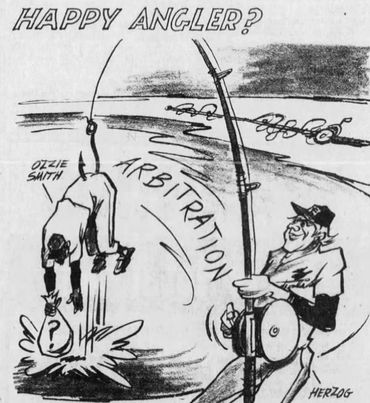
San Diego officials initially balked, worried about offending their new shortstop, but finally sent the letter, allowing the deal to go through. Gottlieb would later use that same document in Ozzie’s arbitration hearing to argue for a higher salary — a rare case of a front office literally signing off that a player was superior before trading for him.
Part III — The Padres’ Bright Forecast
In San Diego, optimism poured from every corner of the clubhouse. Manager Dick Williams talked like a man who’d just plugged a missing gear into his machine. “Templeton’s a line-drive hitter who’s adept at ripping the ball into the alleys,” he told the Evening Tribune. “We’ll hit him third.”
Columnists promised that the Padres could gain “80 to 100 points at the plate from their new shortstop,” predicting more RBI, more runs, and “no drop-off on the basepaths.” Templeton, they noted, was a Santa Ana native who once stole 34 bases — and Williams vowed to let him run again. Escaping the artificial turf of Busch Stadium, one writer said, would only make him faster and freer: “He’ll be able to perform acrobatic feats on San Diego’s natural grass that were impossible in St. Louis.”
It was a burst of sun-drenched optimism that seemed perfectly Californian — and, in hindsight, perfectly misplaced. By the time he slipped on a Padres cap, the two men had effectively traded narratives. Ozzie would try to prove he could hit; Templeton would try to show he could smile again.
Part IV — The AI Swapulator Verdict
The machine hums. Lights flicker. A printout rattles from the console. Time to see how history judged the deal.
According to the AI Swapulator’s calculations, the Cardinals dominated every category. In WAR Differential (70%), Ozzie Smith produced 76.9 career WAR to Garry Templeton’s 13.2 — a staggering advantage of +63.7 for St. Louis. In
Championship Impact (10%), Smith’s brilliant defense and leadership during the 1982 World Series added another +9 points to the Cardinals’ side. In
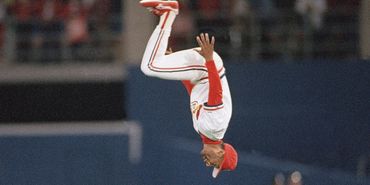
Financial Value (10%), Ozzie’s fifteen seasons of elite play on a modest contract earned another +9. And in Intangibles (10%) — charisma, fan devotion, backflips, and Hall of Fame immortality — the Wizard swept the board again with +10 points.
📈 Final Score: Cardinals – 93 points | Padres – 6 points
Margin: Cardinals win by 87 points
💡 Verdict
The AI Swapulator didn’t need long. The dials spun, the lights blinked, and then it froze in the far-right zone labeled Historic Heist.
St. Louis didn’t just win the trade — it rewrote baseball’s identity. Ozzie became the Cardinals’ heartbeat for fifteen years, redefining what defense could be, what charisma could mean, and how much joy could fit inside a backflip. Templeton, for his part, steadied himself and had a respectable run in San Diego, but the wizard simply lived in another realm.
— AI Baseball Guy | Human perspective. AI precision. Baseball reimagined.

Our AI Swapulator favored the Cardinals by 87 points.