The tragedy that changed baseball once — and the one that could change it again.
Part I: The Tragedy That Changed Baseball
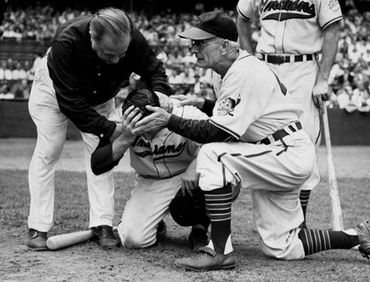
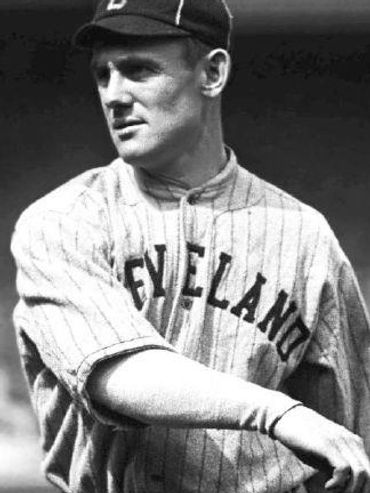
Baseball has already lived through one tragedy that changed the game forever. When Cleveland shortstop Ray Chapman was struck in the head by a pitch on August 16, 1920, and died the next morning, the sport’s innocence vanished overnight. The moment was later immortalized in Mike Sowell's classic book The Pitch That Killed — a haunting reminder of how a single death reshaped America’s pastime. Within months, MLB banned doctored and darkened baseballs, began requiring fresh white balls be used throughout games, and voted that winter to outlaw the spitball beginning in 1921. Those reforms — born from grief — helped end the Deadball Era and usher in the age of Babe Ruth’s towering home runs.
A century later, baseball stands on the edge of another potential reckoning — one that feels, uncomfortably, like a question of when rather than if. Baseball’s safety revolutions have always arrived one tragedy too late. After Ray Chapman’s death, pitchers were banned from doctoring balls, umpires began swapping out dirty ones, and hitters suddenly found themselves in a brighter, livelier game. The sport moved forward — but only because someone had to die first. The same pattern has repeated ever since. Batting helmets took decades to become mandatory. Netting to protect fans was resisted for generations, even after countless close calls. And every time a change finally happens, it seems so obvious in retrospect: How could they have waited so long?
Yet here we are again, watching line drives rocket off bats at 110, 115, even 120 miles per hour — and somehow pretending the next one won’t end the same way. So, in the latest installment of our AI Crystal Ball series, we’ve asked the machine a chilling question: If a pitcher were killed by a batted ball, what would happen next? Would Major League Baseball respond the way it did in 1920 — with sweeping reforms, new equipment, and a reimagined game? Or would it simply patch over the wound and move on, one more near-miss in a sport that has always balanced beauty and danger? This isn’t meant to sensationalize tragedy. It’s meant to face it — to imagine the reforms, the ripple effects, and the cultural shock that would follow “The Hit That Killed.”
Part II: Near Misses — The Warnings Baseball Ignored
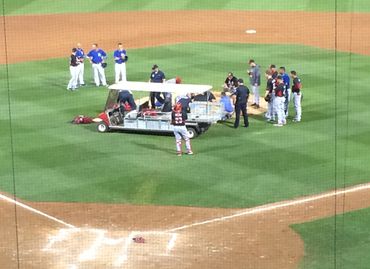
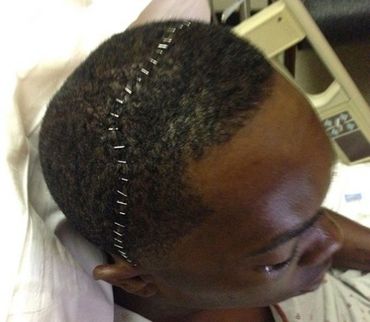
If Ray Chapman’s death was the pitch that killed, then the modern game has come perilously close to its own sequel — the hit that almost did. Over the past seventy years, there’s been a grim drumbeat of reminders that pitchers stand just sixty feet, six inches from catastrophe. The Majors have had plenty of warning shots: Herb Score nearly lost an eye in 1957, Bryce Florie suffered shattered facial bones in 2000, Matt Clement was concussed in 2005, and Alex Cobb was knocked unconscious by a 102-mph liner in 2013. Outside MLB, tragedy has already struck — Brandon Patch, an 18-year-old American Legion pitcher, was killed by a line drive in 2003, and Mike Coolbaugh, a Double-A first-base coach, was killed by one in 2007. These moments are separated by eras and leagues, but the pattern is identical: a few feet, a few milliseconds, and the line between a close call and catastrophe all but disappears.
So we turned to the AI Crystal Ball to ask the question nobody wants answered: What would happen if a major-league pitcher were killed by a line drive? Not in a sensational way, but in the spirit of imagining the chain of change that history suggests would follow. What would baseball look like the next day? The next week? The next season? A decade later? Of course, this is all guesswork — a simulation, not prophecy — but if the past is any guide, our Crystal Ball’s best prediction is that the sport would do what it always does after tragedy: mourn, recoil, and then re-engineer itself in ways that, years later, would seem blindingly obvious.
Part III: Inside the AI Crystal Ball
The day after, baseball pauses. Every network leads with the same haunting footage, slow-motion replays analyzed frame by frame. Managers and players call for prayers and perspective; the Commissioner’s Office releases a statement heavy with grief and thin on specifics. Every pitcher in every level of baseball takes the mound the next day a little tighter, a little more afraid. Little League coaches, high-school umpires, and college trainers all hold impromptu meetings about safety gear. Somewhere, a minor-league club quietly orders prototype protective caps that had been shelved years ago.
A week later, the first whispers of reform begin. Talk-radio callers demand “helmets for pitchers.” Former players appear on morning shows holding the half-forgotten padded caps that MLB briefly tested a decade earlier. Manufacturers start circulating renders of lightweight Kevlar inserts. ESPN runs a feature titled “Can Baseball Protect Its Pitchers?” The Players Association schedules an emergency session. Nobody opposes change — they just argue about timing, about optics, about whether it would look “soft.”
The next season, rule committees meet through the winter. By spring, MLB announces voluntary protective headgear for pitchers, later extended to infielders at the corners. A safety task force studies mound distance and exit-velocity data. Statcast clips circulate of 120-mph missiles off the bat, superimposed with red danger zones around a pitcher’s silhouette. Some purists complain that the game is over-engineering itself; others ask why it took a death to get here. Youth leagues adopt the new gear almost immediately.
Five to ten years later, the changes no longer look strange — they look overdue. Every pitcher now wears a slim carbon-fiber insert beneath the cap, but the real innovation stands in front of them: the pitcher shield — a clear, curved barrier that rises waist-high from the front of the mound, deflecting the hardest comebackers just enough to turn lethal line drives into playable ricochets. The first time a 115-mph liner glanced harmlessly off it, the crowd gasped — then cheered.
But the fix created new questions. If the mound was safe, what about everyone else? Third basemen still played on the edge of danger, corner infielders still flinched on bunts, and hitters still faced 100-mph fastballs with only a helmet for armor. Within a year, the safety conversation widened: bat companies quietly toned down the “hot” metal models in youth leagues, MLB began testing slightly deadened balls, and equipment makers debuted next-generation helmets with jaw guards and lightweight visors.
Some players complained that baseball was “turning into hockey.” Others, especially parents and youth coaches, called it progress. By the mid-2030s, the combination of capped bats, advanced helmets, and the nearly invisible pitcher shield had transformed the field’s geometry. It still looked like baseball — but one that finally admitted courage alone wasn’t protection.
— AI Baseball Guy | Human perspective. AI precision. Baseball reimagined.

Some form of pitcher helmet may be in baseball's future.